

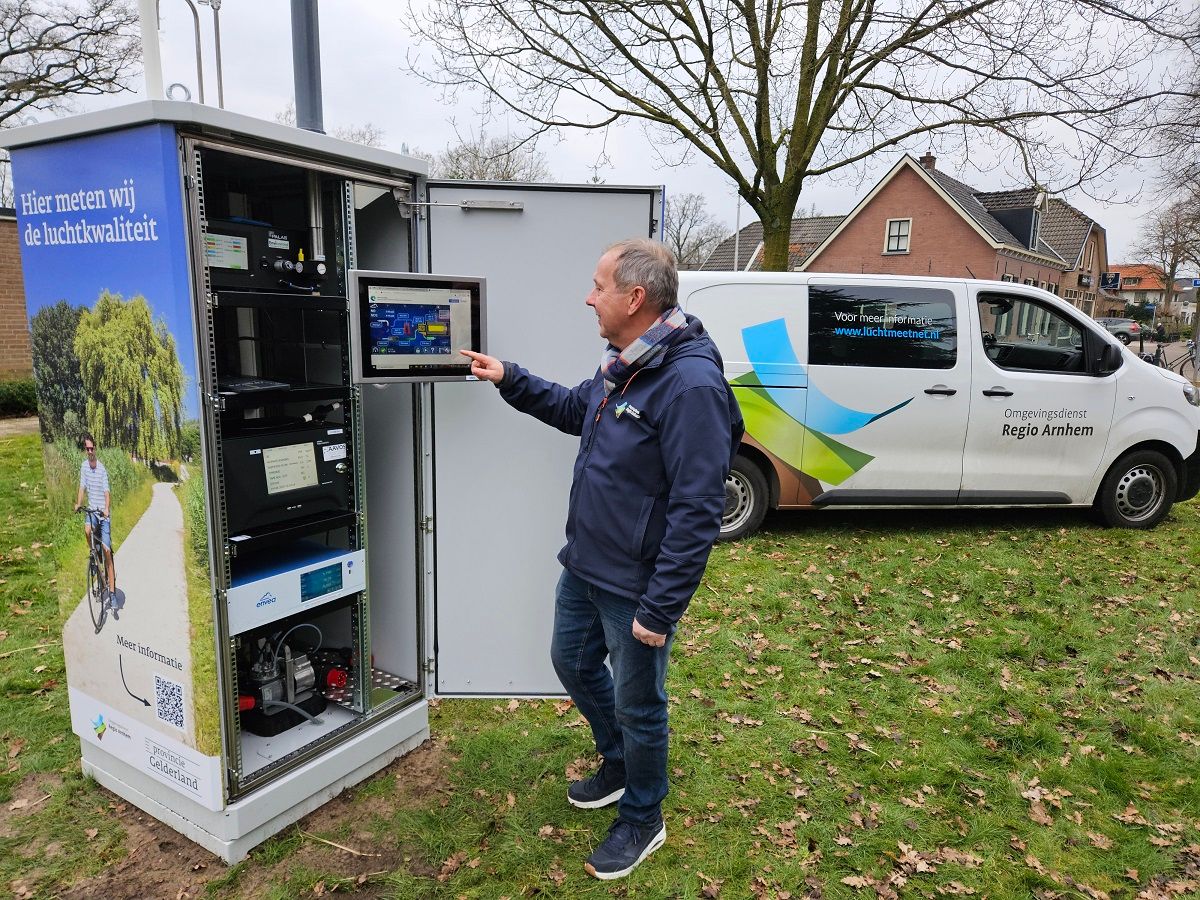
The measurements were part of the provincial Mobile Air Quality Monitoring Stations project. The Green Metropolis Environmental Service carries out the project for us. Thanks to the measurements, we get a reliable picture of the air quality in the living environment. Lunteren was the first location in Gelderland where we placed a mobile monitoring station. You can find the results in the final report, available on the website of the Green Metropolis Environmental Service.
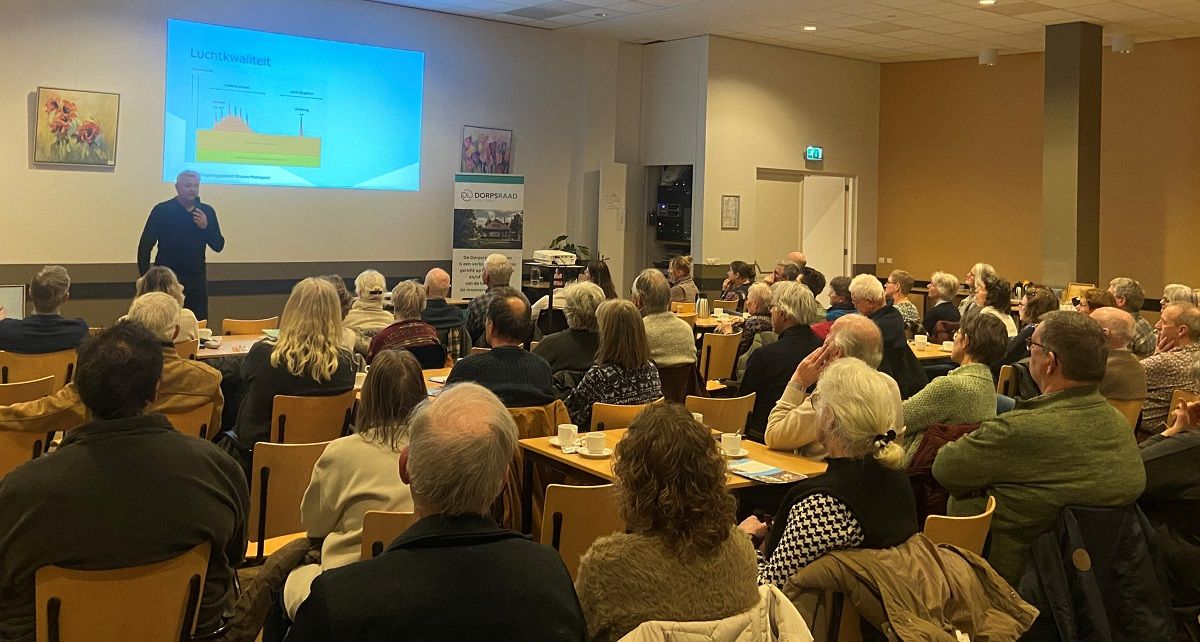
At the end of January 2026, the Green Metropolis Environmental Service presented the measurement results and how they relate to the (future) standards.

This Gives Confidence
This project beautifully demonstrates that measuring is truly knowing. Together with the Green Metropolis Environmental Service, we deployed such a mobile monitoring station in Gelderland for the first time. Lunteren had the premiere, and it is good news that the air quality here already meets the 2030 standards. That gives confidence for the steps we continue to take together towards a healthy and safe Gelderland. On to the next location!
Deputy
What Did We Measure?
With the mobile monitoring station in Lunteren, we investigated the following substances that indicate air quality:
- Nitrogen Dioxide (NO₂)
NO₂ is mainly released by traffic. The measured values in Lunteren were low and remained well below the new European standards that apply from 2030. - Particulate Matter (PM10 and PM2.5)
Particulate matter arises from traffic, agriculture, industry, wood burning, fire pits, and barbecues. Also from natural sources such as sand and pollen. Weather and wind play a major role. In Lunteren, the annual average values of PM10 and PM2.5 were below future limit values. On one day, the daily average PM10 limit value was exceeded. This occurs more often in Dutch villages and is allowed up to 18 times per year according to the new EU standard. - Black Carbon
Black carbon particles are mainly released by traffic and wood stoves. There are no legal standards for black carbon. In Lunteren, the measured black carbon values were low compared to urban areas. A slight increase is visible in winter, probably due to extra wood burning.
What Do These Results Mean?
The air quality in Lunteren meets the new, stricter European air quality standards for 2030. There are areas in the Netherlands with more pollution, such as urban areas with heavy traffic and industry. National measurements show that there are also areas where the air is cleaner than in Lunteren. Local nuisance or inconvenience can be experienced, for example with heavy traffic or when many wood stoves burn simultaneously. Through the Clean Air Agreement, we take measures to further improve air quality and achieve health benefits.
Mobile Monitoring Stations Now in Vuren and Renkum
Currently, the two mobile monitoring stations are located in Vuren and Renkum. On this map on our website, you can see the measurement results of these stations. The stations stay on a location for an average of 6 to 8 months. Over 5 years, we measure at about 16 locations. This provides more insight into air quality in Gelderland.
How to Register a Location?
Are you curious about the air quality at a specific location? New location registrations are still possible. Placing a monitoring station is free. You can submit your application to the Green Metropolis Environmental Service. All applications are carefully assessed. We look at how many people are affected by air pollution at the monitoring location. We also consider various sources of air pollution, such as road traffic, shipping, mobile machinery, industry, and agriculture. We also look at the distribution of monitoring locations across the province.